




Choosing to pursue an MBA is a significant decision. But before you even get to questions about curriculum, applications or tuition, there's a more fundamental one: which type of MBA is actually right for you?
The MBA landscape has changed considerably in recent years. What was once a fairly straightforward choice has opened up into a range of formats, schedules and specializations, each designed with a different kind of learner in mind. The question isn't just whether an MBA makes sense for you, but which one does.
Here's a breakdown of the most common types of MBAs, what makes each one distinct and how to assess fit.
MBA Formats: Matching the Right MBA Degree for You
The format of an MBA determines how and when you learn, and it's often one of the things that matter most.
Full-Time MBA
A full-time MBA is what many consider the “traditional” model: an immersive, on-campus experience typically completed in two years. Students attend classes during the day, participate in cohort activities and have access to the full range of campus resources, from career services to networking events.
This format works well for those who are coming from an undergraduate degree or have the ability to step away from full-time employment and make the MBA a complete, focused experience. The tradeoff is opportunity cost; pausing income and professional momentum is a serious consideration, especially for those with financial obligations or already established careers.
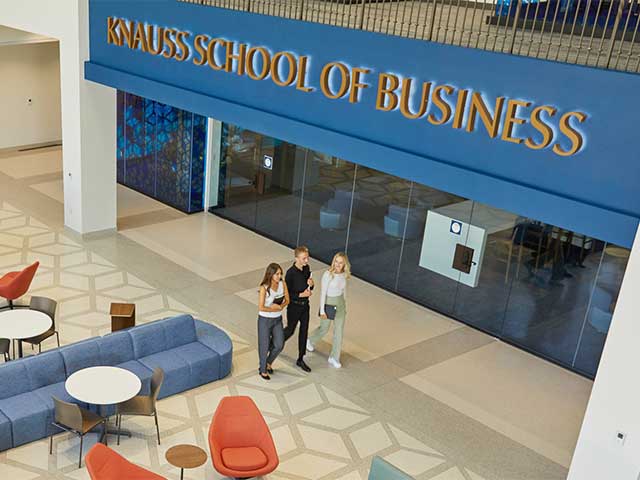
At the Knauss School of Business, the Full-Time MBA is a STEM-designated program that blends strong business and leadership fundamentals with the analytical depth today's employers are looking for, all in the heart of San Diego's growing innovation economy.
Learn more about what a STEM MBA is and how it differs from a traditional MBA.
Part-Time MBA
A part-time MBA lets you keep working while earning your degree. Classes typically meet in the evenings or on weekends, allowing students to apply what they're learning in real time to their current roles.
This format is especially well-suited for professionals who want to grow within their industry or move into a different position without leaving the workforce. The pace is slower, as most part-time programs take two to four years to complete, but the ability to apply new skills immediately in your job can accelerate your return on investment. The challenge is balance: juggling work, coursework and personal obligations requires strong time management.
The Part-Time MBA at Knauss is designed for working professionals who want to keep building their careers while earning their degree, with evening and weekend scheduling that fits around your life, not the other way around.
Explore how to maximize the benefits of a weekend MBA program.
Flex MBA
A Flex MBA is designed to balance structure with adaptability. Rather than following a rigid full-time schedule, students have more options for sequencing their coursework, making it easier to manage alongside a career or other commitments.
This format works well for working professionals who need more scheduling options than a traditional program offers, but it still requires consistent commitment and a clear course path. It's not a self-paced program, but a structured degree with built-in flexibility. At the Knauss School of Business, the Flex MBA gives working professionals exactly that kind of control, without sacrificing academic rigor.
Learn more about finding the best hybrid MBA program for you.
Online MBA
A fully online MBA delivers coursework remotely, either through live virtual sessions or self-paced modules. This format removes geographic barriers entirely, making it a strong option for students who can't or don't want to commute to campus. The tradeoff is that in-person networking and cohort bonding tend to be more limited, though many programs have developed robust virtual communities to offset this.
Executive MBA
The Executive MBA is designed for senior professionals, typically those with a decade or more of experience, who want to deepen their strategic leadership skills without stepping away from their careers. Programs are usually cohort-based, with weekend-intensive formats, and assume that students arrive with significant management experience. The Executive MBA is less about building a foundation and more about refining and elevating what's already there.
MBA Concentrations
Once you've chosen a format, the next question is focus. A general MBA builds a broad business foundation: strategy, finance, leadership, operations. Concentrations let you go deeper in an area that aligns with your career goals.
At the Knauss School of Business, students can specialize in six areas:
Business Analytics: For those who want to lead in data-driven environments, building skills in interpreting complex data sets and using analytics to drive decisions.
Entrepreneurship: Built for students who want to launch something new or lead innovation inside an existing organization, covering everything from venture development to opportunity evaluation.
Finance: Suited for those pursuing roles in investment, corporate finance or financial strategy, combining quantitative rigor with real-world application.
Marketing: Focuses on consumer behavior, brand strategy and the tools modern marketers use to reach and retain customers.
Organizational Leadership: Designed for students moving into management or executive roles who want to build the skills to lead teams and shape culture.
Supply Chain Management: Covers the full arc of global operations, from sourcing and logistics to sustainability and risk management.
Concentrations are worth thinking about carefully. Choosing one that aligns with where you want to go can make your MBA significantly more targeted and impactful.
Explore how to choose the right MBA specialization.
Choosing the Right MBA Format for You
There's no universal answer, but there are a few questions that might be worth considering:
Can you step away from work, or do you need to stay employed? Full-time is a powerful, immersive experience, but part-time and flex formats make the degree accessible for those who can't pause their careers.
Do you have a specific industry or function you're moving toward? A concentration adds depth that a general MBA may not.
Do you need more scheduling options than a traditional program offers? The Flex MBA provides more room to balance work and coursework, though it still requires consistent commitment and a defined course path.
Where are you in your career? If you're a senior professional looking to sharpen leadership skills, an Executive MBA may be the better fit than a traditional program.
If you're still weighing your options, the Knauss MBA comparison page lays out the formats side by side so you can evaluate them in one place. And if you want a more personalized recommendation based on your background and goals, our MBA Quiz is a quick way to see which path suits you best.